
Pawan Sehrawat Left Out, No Asian Games Gold Medalists Either — The Message India Is Quietly Hiding in Its Commonwealth Kabaddi Squad
**মূল উত্তর:** ভারতের একেএফআই ২০২৬ সালের কমনওয়েলথ কাবাডি চ্যাম্পিয়নশিপের জন্য ১৭ সদস্যের সম্ভাব্য দল ঘোষণা করেছে, যেখানে পাওয়ান সেহরাওয়াত এবং এশিয়ান Games ২০২৬-এর ১২ সোনাজয়ীর কেউই নেই। আসরটি উদ্বোধনী সংস্করণ, ২১–৩১ অক্টোবর ২০২৬, আহমেদাবাদ, ভারত। **মূল তথ্য:** - আয়োজক আহমেদাবাদ, গুজরাট; আসর ২১–৩১ অক্টোবর ২০২৬; এটি উদ্বোধনী সংস্করণ। - অংশ নেবে ১৪টি কমনওয়েলথ দেশ; খেলা হবে স্ট্যান্ডার্ড স্টাইল কাবাডিতে। - একেএফআই ১৭ সদস্যের সম্ভাব্য দল ঘোষণা করেছে; নির্বাচনের মানদণ্ড ঘোষণা করা হয়নি। - এশিয়ান Games ২০২৬-এর ১২ স্বর্ণজয়ীর কেউ দলে নেই। - পাওয়ান সেহরাওয়াত সম্ভাব্য তালিকা থেকে বাদ পড়েছেন। **সূত্র:** একেএফআই দল ঘোষণা প্রতিবেদন, ২০২৬ (কমনওয়েলথ কাবাডি চ্যাম্পিয়নশিপ ২০২৬)। **সম্ভাব্য Next প্রশ্ন:** প্রশ্ন: পাওয়ান সেহরাওয়াত কেন বাদ পড়লেন? উত্তর: একেএফআই আনুষ্ঠানিক কারণ জানায়নি; বিশ্লেষকরা এশিয়ান Games-Next বিশ্রাম ও ঘূর্ণন নীতিকে সম্ভাব্য কারণ হিসেবে দেখছেন। প্রশ্ন: কমনওয়েলথ কাবাডি চ্যাম্পিয়নশিপে বাংলাদেশ খেলবে কি? উত্তর: কমনওয়েলথ সদস্য হিসেবে বাংলাদেশ অংশ নেওয়ার যোগ্য, তবে চূড়ান্ত অংশগ্রহণকারী তালিকা এখনো নিশ্চিত নয়। প্রশ্ন: কাবাডি কমনওয়েলথ Gamesে অন্তর্ভুক্ত হবে কি? উত্তর: এটি একটি লক্ষ্য, নিশ্চয়তা নয়; কাবাডি বর্তমানে কমনওয়েলথ Gamesের খেলা নয়, এবং অন্তর্ভুক্তির জন্য বহু দেশে স্থায়ী প্রোগ্রাম প্রয়োজন।
On a Rajshahi ground I once learned that 4-4-2 was never merely a formation; it was a loyalty test. Who stands where, who chases whom, who obeys the coach to the letter and who thinks for himself on the pitch — the positions of eleven men are really a sketch of a social contract. I never forgot that football lesson. So when someone tells me squad selection simply means picking the best seven, I laugh. In kabaddi, selection is never just arithmetic about the best seven — it is a declaration, in which a federation announces whom it trusts, whom it is storing for the future, and whom it currently has no use for.
Last week, the Amateur Kabaddi Federation of India, AKFI, published exactly such a declaration. From 21 to 31 October 2026, the inaugural Commonwealth Kabaddi Championship will be held in Ahmedabad, Gujarat. For that event India announced a 17-member probable squad. Missing from it is Pawan Sehrawat — one of the biggest star names in the Pro Kabaddi League. And not just Sehrawat: none of the 12 players who won gold at the 2026 Asian Games is in that list of 17.
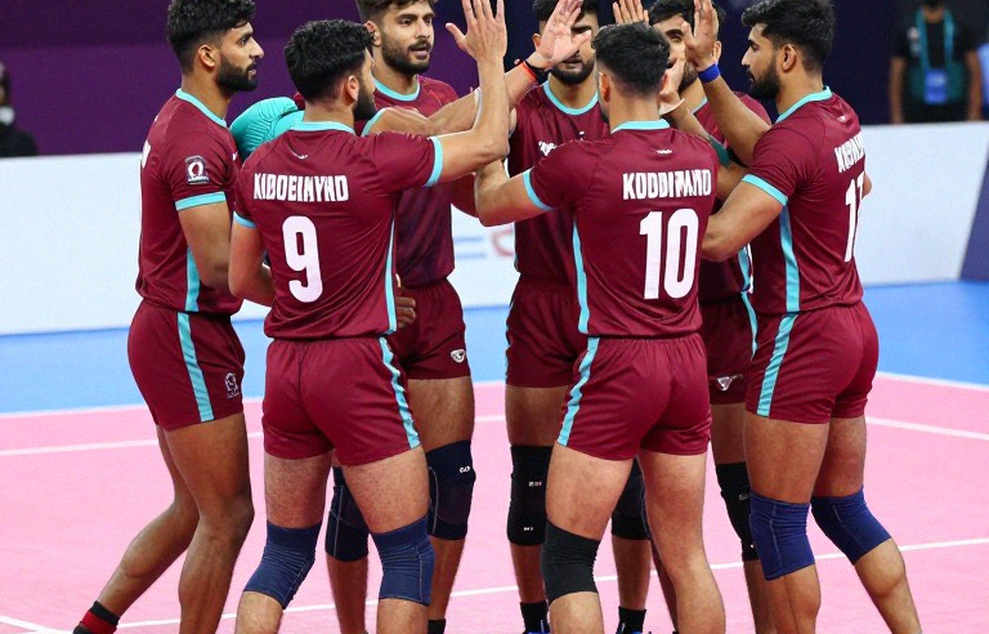
The instinctive reaction has formed around Sehrawat — star dropped, shock, why. My first reaction was different. The real story here is not who was left out; the real story is why India could afford to leave them out.
Let me set the context. The Commonwealth Kabaddi Championship 2026 is not an established event — this is its first edition. The host is Ahmedabad, Gujarat, where India's infrastructure for staging major sports events is expanding fast. Fourteen Commonwealth nations will take part. The event will be played in Standard Style kabaddi — the international code used at the Asian Games and in the Pro Kabaddi League, not the rural Circle Style of Punjab.
For readers who do not dwell on kabaddi's finer rules, briefly. A raider enters the opponent's half within 30 seconds and scores by touching a defender and returning to his own half. If the defending side stops the raider in their half, that is a tackle point. Throughout the raid the raider must chant kabaddi kabaddi without a break — the cant, proof that he is not inhaling. Crossing the bonus line earns 1 point, but only when the defending side has 6 or more players on court. If an entire side is ruled out, the opponent gets 2 bonus points and all players revive — this all out is kabaddi's biggest swing. After two consecutive empty raids, the third becomes do-or-die — and if that also yields nothing, the raider himself is out.
These rules matter here because they explain how fast, how high-scoring and how psychological kabaddi is. Scoring is so dense that a single raid can turn a match, and precisely for that reason every squad decision carries large risk. India is the biggest beneficiary of these rules, and therefore India can afford to take the biggest risks.
What is colliding here is two distinct value systems. In the Pro Kabaddi League, Sehrawat is not merely a raider — he is a brand, a leap, a season's poster. A franchise builds its whole marketing around him. But the logic of a national camp is the exact opposite — a federation does not build stars, it builds a system. So Sehrawat's omission is a clash between the league's star economy and the federation's system economy. That is why the headline rings so loud — it puts the league's biggest brand face to face with the federation's quietest decision.
The mainstream explanations are two. First, resting the stars and testing the bench. Second, that this is another big step for kabaddi, another gracious Indian gift to the international stage. Both look innocent at first glance. Both have problems.
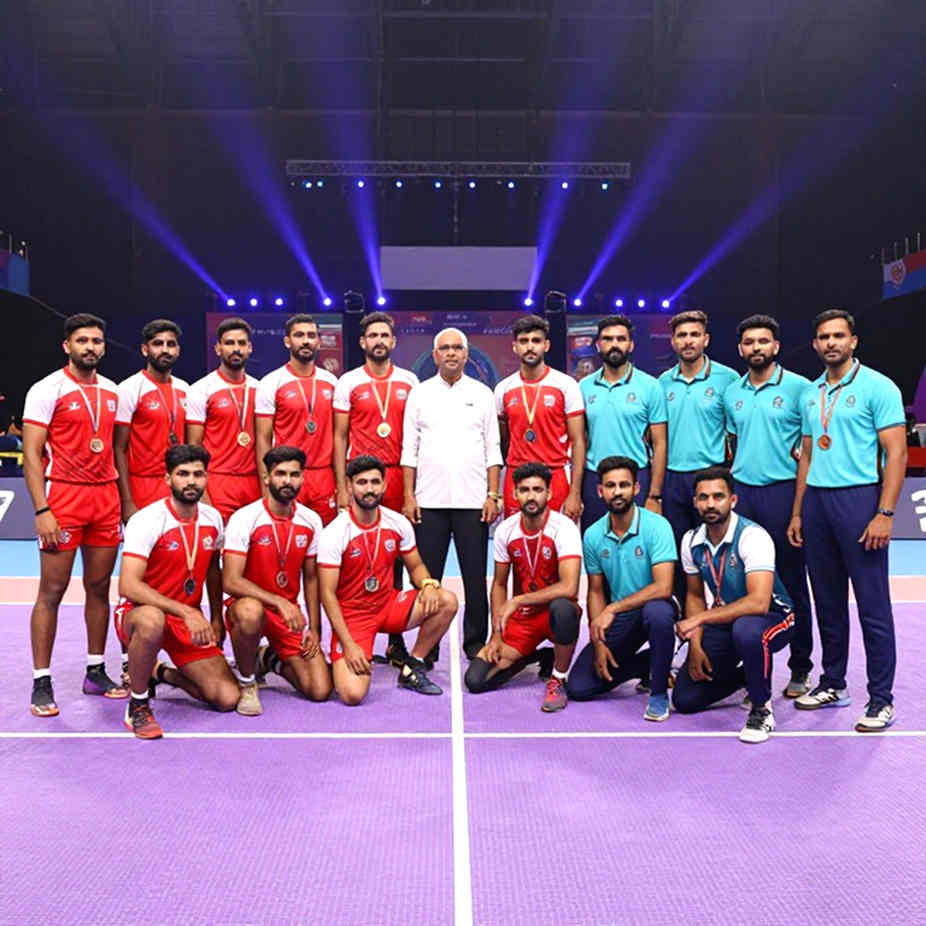
Start with the first. The 2026 Asian Games ended in early October, the Commonwealth Championship begins on 21 October — a gap of two and a half weeks. Every raid is a sprint, a collision, a fall and another sprint for a raider's body. Sending the same stars into two consecutive major events is inviting injury. In that sense, leaving out the 12 gold medallists is not a conspiracy; it is a calendar compulsion.
But the rest explanation is a little too comfortable. Rest explains why the stars are absent; it does not explain why India is still the favourite without them. That second question is the real one. The answer lies buried in kabaddi — India's talent pipeline has accumulated so much depth that a list of 17 can be assembled with not a single gold medallist in it, and the squad is still the strongest in the event.
In football this does not happen. Send a B-team in football and the smaller side exploits it, the gaps show. Because football's talent is global, dispersed and competitive. In kabaddi there is almost no global talent. In Standard Style, India is a monopoly — Iran is the only genuine challenger, the rest trail by many steps. So for India a B-team is not a risk, it is a luxury. In a sport where you are the monopoly, depth means insurance, and with insurance you can take risks in comfort.
This is where Germany's lesson arrives. On the night Germany lost to Mexico, I stopped blaming Mexico and started studying chaos. Because a side that steps outside its own control against an unfamiliar opponent often reveals, in defeat, not the opponent's excellence but the limits of its own structure. At the Commonwealth Kabaddi Championship India will stand before exactly such unfamiliar opponents — a first edition, no history, no record of how good the opposition is. Facing this unknown, the alibi of rest and the luxury of depth work together.
The second explanation is even weaker — fourteen Commonwealth nations. The number suggests kabaddi has spread across the Commonwealth. The reality is different. In the Commonwealth, kabaddi is essentially the South Asian members — India, Pakistan, Bangladesh, Sri Lanka, Malaysia, Singapore — plus a few diaspora-heavy nations such as England, Australia and Canada. The figure of 14 is a membership list, not a competitiveness list. In the rest of the Commonwealth, kabaddi's grassroots base is close to zero.
There is a mechanical point here that many skip. Pakistan's heritage is largely in Circle Style — the rural, circular-court variant. In Standard Style, Pakistan has never been equally influential. The two variants demand different bodies, different tempos, different reflexes. So even among South Asian Commonwealth nations the balance shifts by code, and the Commonwealth stage is Standard Style, where India's monopoly is clearest.
This is where Bangladesh's question enters, and for me it is the most interesting. Bangladesh is a Commonwealth member, and Bangladesh is a kabaddi nation — we have Asian Games medals, and on our soil kabaddi is a national game. For India this event is a B-event, but for Bangladesh it is an A-event. Same mat, same rules, but the gravity of significance is entirely different. India is investing in the future; Bangladesh may be getting its first chance to play kabaddi on a Commonwealth stage. Where India fears losing nothing, Bangladesh has the chance to write a new history.
But there is a price to this asymmetry. If the host itself does not send its best squad, questions about the event's competitive standard will inevitably arise. And that question strikes directly at the event's real purpose.
What is the real purpose? The report says the success of this event could help push kabaddi towards the Commonwealth Games. That is the strategic core. But kabaddi is not currently a Commonwealth Games sport. Inclusion by the Commonwealth Games Federation requires genuine programmes in many countries, participation in both men's and women's categories, and durable infrastructure. A first edition, a diaspora-dependent field and a rotated India together do not prove a case for inclusion; they hint at a political-marketing exercise.
Here the governance question is unavoidable. AKFI announced a 17-member probable squad but announced no selection criteria. Why these 17, why not Sehrawat — there is no official explanation. For a federation with a past of election disputes and suspension of recognition, the demand for transparency is fair. When selection criteria are absent, the gap that opens is exactly the gap the headline fills. Had criteria existed, there would not have been so much talk about Sehrawat — there would have been no reason for it.
Here the media economy needs examining. The headline is selling the star's absence, even though the squad is built without stars. The event's competitive value is low, but the traffic value of a star name is high. As in the transfer market, the real story here is never in the headline — it is in the structure behind the decision, in contracts and agent movements. The report that put Sehrawat in the headline did not actually say whether he was among those 12 Asian Games players. That single uncertainty is the commercial foundation of the whole headline. If he was outside those 12, his omission is a separate and bigger story; if he was inside, it is entirely part of the rotation policy.
And there is another large gap — no numbers at all on the economics of a first edition. No broadcast revenue, no sponsorship, no ticket data, no media rights value. A first edition has no benchmark, so its commercial health is unknown — and that unknown is itself information. An event that does not announce its own scale is probably not certain of its own importance either.
And the reality on the ground? How full Ahmedabad's stands will be is this event's biggest test. Year after year in Bangladesh I have watched kabaddi in near-empty halls, where you can hear the mat sweat but there is no roar from the gallery. An empty stadium never lies — it exposes whether the sport's product is actually working, or merely surviving on a broadcast claim. If the Commonwealth Kabaddi Championship fills its tickets, the internationalisation is real; if it remains a television product, that is a broadcast claim, not a cultural truth.
And what is the tactical test for this squad? The 17 must prove three things. One, the do-or-die raid under pressure — where the previous two raids have been empty, and in the third the raider must write his own fate. Two, keeping the cant intact through fatigue — which is a game of the head, not only the lungs. Three, tackling at the corner — where the decision is when to commit the ankle hold and when to bail out. On the international stage these three are the real tests, not skill.
And here the loyalty test returns. In selection a federation looks not only at ability but at trust — who will follow the system in a do-or-die moment, who will play his own way. On a Rajshahi ground I learned that a formation is a loyalty test; so is kabaddi's list of 17. If Sehrawat's omission is rotation, the message is — no one is indispensable, the system is. And that message speaks to India's depth, not its weakness.
One risk deserves stating, because the star headline has created it. If a diaspora side — England or Australia, whose players learned the game on community-hall floors — beats India's B-team, the media reaction will be disproportionately large. Because the headline has already planted in our minds that this is a star team, so any defeat will look like a scandal. In reality it would be the natural jolt of a rotated squad.
The 2026 Asian Games gold was won by a full-strength India, and that squad is now the benchmark. The 17 probables are being measured against a shadow they cannot see, only sense. That invisible shadow is this event's biggest psychological burden — bigger even than Sehrawat's absence.
Now, where I could be wrong. First, I am assuming Sehrawat is fit and in rhythm. If he is injured or out of form, the omission is an entirely different story — a brave selection call. Second, I am assuming AKFI announced no criteria. If criteria exist that the report did not carry, my transparency criticism is irrelevant. Third, the biggest one — if Iran takes part and at least four non-diaspora nations send full-strength squads, then my conclusion that the event is mainly a marketing exercise rather than genuine competition will be proved wrong. Fourth, I do not want to force the loyalty-test lens everywhere — sometimes selection simply means rest, with no hidden message. I concede that.
So let me clarify where I stand. The simplest way to falsify my claim is this — if India's B-team loses at the event, or if India loses to Iran, Bangladesh or Pakistan, my account of the luxury of depth collapses. And if India wins every match by a wide margin, the galleries stay empty, and talk of the Commonwealth Games quietly fades within a year, then it will be clear this was a marketing exercise.
This story needs a filter for the reader, because not every sentence carries equal weight. Verifiable: the 17-member probable squad, no gold medallists, Sehrawat omitted, Ahmedabad as host, 21 to 31 October, 14 nations, a first edition. Not verifiable: Sehrawat's form or injury, AKFI's selection criteria, Iran's participation, the event's commercial scale, the Commonwealth Games pathway. The second list is the real story, and that is precisely where the report falls silent.
My forecast is threefold. One, India will win this title — even with a B-team. Two, the biggest name to emerge from the event will be a raider almost nobody outside India has heard of — the real success will not be a star but the arrival of a new name. Three, kabaddi will not secure a Commonwealth Games place before 2030, and this event will not be the strongest evidence of that path.
For Bangladesh my question is different. Will we treat this event as a B-event, or as the first chance to stand on a Commonwealth stage? India is resting, and if we use this chance to test a new generation, then perhaps a decade from now someone will say — the real story was not India's stars being dropped, but the birth of Bangladesh's first Commonwealth kabaddi squad. The chance to write that story is still open.