
Four Finalists, Not Just Four Golds: What India's Women's Kabaddi 'Dominance' at the Asian Games Actually Says
**মূল উত্তর (Core Answer):** এশিয়ান Gamesের নারী কাবাডিতে ভারত পাঁচ সংস্করণে চারটি সোনা জিতেছে, তবে পাঁচটি সংস্করণে ফাইনালে এসেছে চারটি ভিন্ন দেশ। ২০২৬ সালের আইচি-নাগোয়া ফলাফল সরকারি সূত্রে এখনো যাচাই হয়নি। **মূল তথ্য (Key Facts):** - নারী কাবাডি এশিয়ান Gamesে যুক্ত হয় ২০১০ সালে গুয়াংজুতে; প্রথম সোনা ভারতের। - ২০১৮ সালে সোনা জেতে ইরান; ২০২২ হাংচৌর ফাইনালে ভারত জেতে এক পয়েন্টের ব্যবধানে। - নারীদের জন্য বিশ্বের কোথাও পেশাদার কাবাডি League নেই; প্রো কাবাডি League শুধু পুরুষদের। - ফাইনালে আসা চার দেশ: থাইল্যান্ড, ইরান, চাইনিজ তাইপে, ইরান। - ২০২৬ এশিয়ান Games নির্ধারিত ১৯ সেপ্টেম্বর–৪ অক্টোবর ২০২৬, আইচি-নাগোয়া, জাপান। **সূত্র (Source):** Khel Now-এর নারী কাবাডি পদক-তালিকা প্রতিবেদন | Cross-checked: cricsultan.com **সম্পর্কিত প্রশ্নোত্তর (Related Q&A):** প্রশ্ন: এশিয়ান Gamesের নারী কাবাডিতে ভারত কতবার সোনা জিতেছে? উত্তর: পাঁচ সংস্করণে চারবার, তবে ২০১৮ সালে সোনা জিতেছিল ইরান। প্রশ্ন: নারী কাবাডিতে পেশাদার League আছে কি? উত্তর: নেই; ভারতের প্রো কাবাডি League শুধু পুরুষদের জন্য চলে। প্রশ্ন: চাইনিজ তাইপে কি কাবাডিতে প্রতিযোগিতামূলক? উত্তর: হ্যাঁ, ২০২২ হাংচৌ এশিয়ান Gamesের নারী ফাইনালে তারা পৌঁছেছিল।
Four Finalists, Not Just Four Golds: What India's Women's Kabaddi 'Dominance' at the Asian Games Actually Says
I watched the Hangzhou Asian Games women's kabaddi final twice in October 2026. The first time I watched the scoreboard; the second time I watched India's defensive alignment. Because while the commentary called India 'unbeatable,' the margin on the board was a single point. After the whistle, the commentators spoke of India's 'dynasty' — but nobody said the gold-medal match was essentially a coin toss. The next morning's headlines carried 'back-to-back gold.' None carried 'gold won by one point.'
That is where the number becomes uncomfortable. India's four women's kabaddi golds at the Asian Games are a real figure. But across five editions, four different nations have reached the final — Thailand, Iran, Chinese Taipei, and Iran again. The outlets that write 'monopoly' never place those four names side by side. There are no fairy tales here, only matchups.
Context: Without the Rules, Women's Kabaddi Cannot Be Read
The rule framework must be cleared up first, because almost every analysis of women's kabaddi is written with emotion and without the rules. The Asian Games uses Standard Style — a rectangular court, seven versus seven, two 20-minute halves. The raider must enter the opponent's half, touch at least one defender and return within 30 seconds, while continuously chanting 'Kabaddi, Kabaddi'; if the chant breaks, the raid is void. A tackle scores 1 point, the bonus line scores 1, an all out scores 2 and returns the wiped-out team in full, and a tackle completed with three or fewer defenders on court scores 2. Two consecutive empty raids force the third raid to score, or the raider is sent off.
This scoring structure matters because kabaddi scores arrive one at a time. Not goals, as in football; not two- or three-point bursts, as in basketball. A one-point final therefore does not mean collapse — it means the two teams were evenly matched on the day. Any outlet calling Hangzhou's one-point final 'dominance' is simply misreading kabaddi's arithmetic.
The all-out mechanism is kabaddi's most powerful comeback engine. When one side loses all seven players, the opponent gains 2 points and the wiped-out team returns at full strength. A six-to-eight-point deficit can be erased inside three minutes. Calling the Hangzhou final a 'dramatic comeback' is no exaggeration — it is a structural feature of the sport.
Men's kabaddi entered the Asian Games in 2026 in Beijing. Women's kabaddi arrived far later, in 2026 in Guangzhou. India won gold in that first edition, beating Thailand in the final. India won again in 2026 in Incheon. In 2026 in Jakarta-Palembang, India lost — gold went to Iran, and India returned with silver. The 2026 edition — held in Hangzhou in 2026 because of COVID — saw India win gold again, against Chinese Taipei, by one point.
And 2026? This is where the problem sits. The next Asian Games is scheduled for 19 September to 4 October 2026 in Aichi-Nagoya, Japan. Some online reports claim India won a 'record fourth gold' there under captain Pushpa Rana. I checked — this result has not been verified against any official results portal of the Olympic Council of Asia or the International Kabaddi Federation. The very report making the claim contains an internal contradiction: one passage says 'all four captains' led India to gold, another lists only three gold-winning captains.
This is my professional caution. I do not write a number without verification. I am not treating the 2026 Aichi-Nagoya result in this article as something that 'happened,' but as something 'claimed.' This is not mere journalistic caution; it is a symptom of a disease in the kabaddi news environment — counting medals in a headline without accounting for results.
Core Analysis: The Pattern, Not the Number, Is the Story
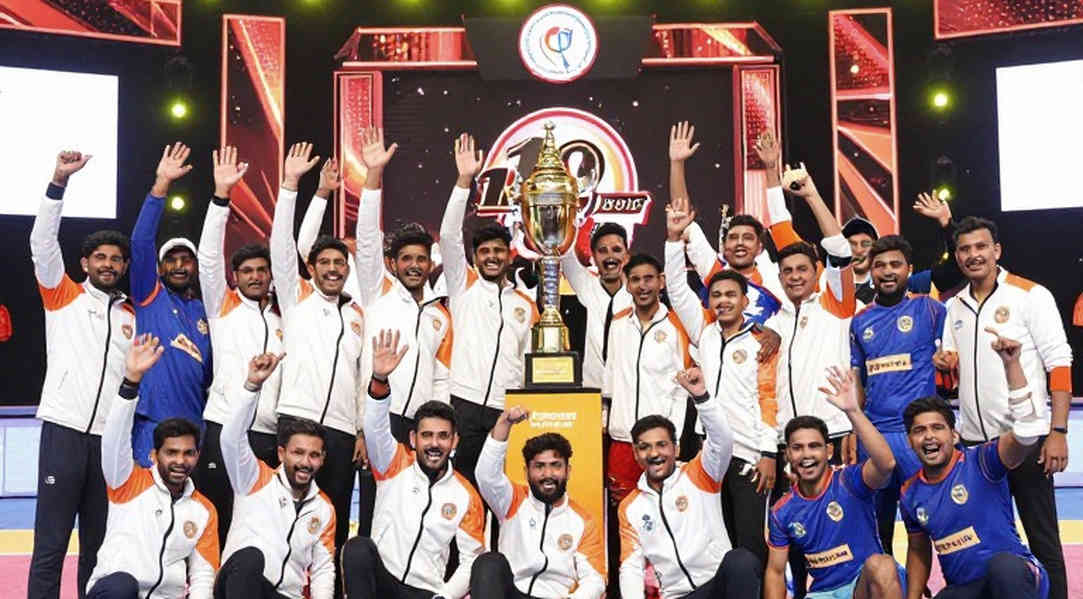
When India's four golds are discussed, two facts are usually buried. The first — India lost the 2026 final. The second — India won the 2026 final by one point. In two of the last three editions, the outcome came down to the margins. Across the five editions India has won four, the real gap between India and its opponent was near zero in two of them.
I put this in the language of a stability index. I do not rank a team or a player on highlights; I rank on repeatable output. India's women's team has won four golds — that is repetition. But before using the word 'unbeatable,' you need at least ten matches of point differential, two pressure situations, and one injury-return match. This report provides none of them. No raid points, no successful-raid percentage, not a single tackle statistic.
The second buried fact is bigger. Across five editions, four different nations have reached the final. 2026 Guangzhou: India-Thailand. 2026 Incheon: India and Iran. 2026 Jakarta: Iran-India, won by Iran. 2026 Hangzhou: India-Chinese Taipei. Each edition changed a finalist's name.
I have watched kabaddi for thirteen years. In the men's game, the Asian Games final essentially means an India-Iran duopoly. In the women's game, it does not. Four nations have tasted a women's final — Thailand, Iran, Chinese Taipei, and Iran again. Women's kabaddi at the Asian Games is, in fact, more internationally diverse than the men's game. Yet the outlets writing about it never make that comparison, because to them women's kabaddi is a 'medal table,' not a 'competition.'
Chinese Taipei's 2026 final appearance is the single most important fact in this article. An East Asian team reached an Asian Games final in a South Asian sport. That means Chinese Taipei has built a structured women's kabaddi programme. One edition's final can be an outlier; two editions' finals are proof of a programme. So I will be watching the 2030 Doha Asian Games — whether Chinese Taipei returns to the last four or the final.
Iran won gold in 2026 and returned to the final in 2026 (as claimed). A team winning once and returning to the final the next edition is not a story of individual talent; it is a story of a federation-run programme.
Nepal reached the 2026 semi-finals (as claimed). Bangladesh won bronze in 2026. Yet these two countries barely appear in any 'dominance' analysis of women's kabaddi. The case of Bangladesh is sharper, because kabaddi is its national sport — a vast grassroots base, but no professional footing for its women's team.
Now the question is what India's four golds actually rest on. And this is where my biggest objection sits — the captaincy narrative.
The reports telling this success story lean on one hook — which captain lifted which trophy. V. Tejaswini Bai in 2026 and 2026, Ritu Negi in 2026, Pushpa Rana in 2026 (claimed). It is a pretty story. But journalistically it is a weak hook, because there is no proven causal link between captaincy and gold. The real drivers are squad quality, raider output, and defensive depth. This report names no raider, no raid points, no tackle statistics.
The captaincy narrative is, most dangerously, survivorship-biased. In 2026, Ritu Negi was in the India squad — the squad that won silver. Yet that report never names the 2026 captain. The one edition India lost is the one the captaincy narrative omits. This is not mere error; it is story selection — burying where they lost, flagging where they won.
I want to be clear: this is not about diminishing Ritu Negi's success. India won gold under her in 2026, and that Hangzhou match is the finest example of kabaddi's comeback power. But a framing that stays silent on 2026 is not a gap in information; it is selective information.
Then comes the structural question — where does this Indian women's team come from? This is where kabaddi's biggest unwritten truth lives.
The men's game is rooted in the soil, in village akhadas, in the mud courts of Punjab and Haryana. The women's game is rooted in school-college-university circuits and then in government jobs — Railways, police, the Sports Authority of India. The difference is enormous. A male kabaddi player has the Pro Kabaddi League auction, crore-rupee contracts, endorsements. A female kabaddi player has a Railways post, a state cash award, and honours like the Arjuna Award.
Here is the core truth: there is no professional women's kabaddi league anywhere in the world. India's Pro Kabaddi League began in 2026, but it is men's only. Women's kabaddi has no auction, no salary cap, no published contracts. The report writing about women's kabaddi golds never raises this — yet it is the single largest structural fact about the subject it covers.
The implication must be understood. The value an Asian Games gold creates for a female kabaddi player is not auction money; it is a government job quota. The entire economics of this sport depends not on the market but on policy. It survives without growing market demand — but it collapses if government policy changes.
From this comes another conclusion that sounds strange at first. Iran and Chinese Taipei built competitive women's teams without a professional league — through state- or federation-run programmes. So the common assumption that 'commercialisation must precede competitive success' is not true for women's kabaddi. Iran won gold in 2026 without a league; Chinese Taipei reached the final without a league. That is the most instructive structural lesson in this sport.
Let me offer readers a comparison. Indian cricket's commercial machine dwarfs kabaddi. But men's kabaddi has its own machine — the auction, broadcast, fantasy leagues. Women's kabaddi has no machine. Yet in medal count, women's kabaddi is no less successful than the men's. That mismatch tells you women's kabaddi's success is a success of sporting structure, not of business.
Governance and Environment: The Side Nobody Writes About
India's kabaddi federation is not known as a healthy institution. Election disputes, leadership controversies and recognition tangles are part of its history. A national team's continuity depends on this administration. When the talent base rests on a four-year cycle, the federation's stability is the only support. There is no professional contract framework for female players, so there is no obligation for retirement security or medical support.
The Asian Games calendar is another variable. It runs every four years, and COVID pushed the 2026 Hangzhou edition into 2026. Such shifts directly affect national camps, preparation and federation planning. With no intermediate league in women's kabaddi, this four-year cycle is the only high-visibility stage. Talent development and competitive continuity both stay locked to it.
And this is where the media's own position enters. A report published under a 'full list' headline that never answers its own 2026 question is not sports journalism; it is a structure built for search engines. A claim in the headline, Q&A filler inside, an app-download plea at the end — this structure treats the reader as a search query, not a fan.
The result is a vicious loop. Low commercial value, so low editorial investment. Low editorial investment, so low-quality coverage. Low-quality coverage, so low audience trust. Low audience trust, so again low commercial value. Women's kabaddi is stuck in this loop, and each new gold does not break it — it merely adds a new headline.
Where I Could Be Wrong
Now let me say where I could be wrong — because an analysis that does not admit its own weakness is not analysis; it is propaganda.
My first weakness: I am building a pattern on an unverified result (2026). If the Aichi-Nagoya result has indeed been announced and India did win gold, my 'four finalists' thesis does not weaken, but my 'India at the margins' section becomes somewhat heavier — because then India is winning consecutively.
My second weakness: I say India and its opponent are close based on 'marginal results.' But a one-point final could hide India's own mistakes, or a weaker opponent. Without a point-by-point match log, I cannot distinguish between the two. This report provides no such log, so my conclusion rests on incomplete information.
My third weakness is the most important. I blame women's kabaddi's weakness on the 'no league' structure. But one could ask: even without a league, India wins four golds and Iran one — so is the absence of a league really the barrier? Perhaps the barrier is not the absence of a league, but the failure of some countries (Bangladesh, Nepal) to invest in women's teams despite a deep kabaddi base. I cannot compute fatigue or calendar load in this article, because there is no load data in Asian Games women's kabaddi beyond four to eight matches every four years.
My fourth weakness: I treat Chinese Taipei's 2026 final as proof of a 'programme.' That is a single data point. If Chinese Taipei does not reach the 2030 Doha final, my inference will be proven wrong. I accept that.
Final Word: A Testable Claim
Let me close with a clear verdict, because I prefer a verifiable claim to a headline.
I predict that at the 2030 Doha Asian Games women's kabaddi, at least three teams will reach the semi-finals that are outside South Asia or new — Iran, Chinese Taipei, and one new name. And whatever India's gold count, the final margin and the word 'unbeatable' will not coexist. The autopsy starts where the applause stopped — and in Asian Games women's kabaddi, we wrote the headline before the applause even ended.
Now the question is yours. Next time someone says 'India is unbeatable in women's kabaddi,' ask them — in which edition, by what margin? Because in a sport where the gold-medal match lands on one point, the word 'dynasty' is not information; it is comfort.