
Three Weeks, Six Cities, Ten Matches: The Injury Ledger Nobody Is Opening on Guangdong's Pakistan Tour
উত্তর: গুয়াংডং (চীন) প্রাদেশিক হকি দল অক্টোবর ১২–৩০ তারিখের সফরে পাকিস্তানের প্রাতিষ্ঠানিক দল এবং অনূর্ধ্ব-২১ ও অনূর্ধ্ব-১৮ জাতীয় দলের বিপক্ষে খেলবে; এটি এফআইএইচ র্যাঙ্কিং-নিরপেক্ষ বন্ধুত্বপূর্ণ সিরিজ, যেখানে ঘোষিত মেডিকেল বা লোড-ব্যবস্থাপনা কাঠামো নেই। মূল তথ্য (Key Facts): • সফর অক্টোবর ১২–৩০; প্রথম ম্যাচ অক্টোবর ১৪, এমপিসিএল হকি Stadium, রাওয়ালপিন্ডি। • প্রতিপক্ষ: আর্মি, নেভি, পুলিশ, কাস্টমস, রেঞ্জার্স, পিডিসি, এমপিসিএল এবং পাকিস্তান অনূর্ধ্ব-২১ ও অনূর্ধ্ব-১৮। • ভেন্যু ছয় শহরে: ইসলামাবাদ, রাওয়ালপিন্ডি, ওয়াহ ক্যান্টনমেন্ট, নারোওয়াল, লাহোর, গোজরা। • অনূর্ধ্ব-২১ ম্যাচ অক্টোবর ২৬, গোজরা; অনূর্ধ্ব-১৮ ম্যাচ অক্টোবর ২৭, লাহোর। • পিএইচএফ সভাপতি মোহিউদ্দিন আহমেদ ওয়ানি: লক্ষ্য তরুণদের International এক্সপোজার ও দুই দেশের হকি সম্পর্ক দৃঢ় করা। তথ্যসূত্র: পাকিস্তান হকি ফেডারেশনের সফর-ঘোষণা এবং স্টেজ-১ তথ্য ডিকনস্ট্রাকশন প্রতিবেদন; সূচি ও প্রতিপক্ষ তালিকা উৎস-ঘোষণা অনুযায়ী। সম্পর্কিত প্রশ্নোত্তর: প্রশ্ন: গুয়াংডং কি চীনের জাতীয় হকি দল? উত্তর: না, এটি একটি প্রাদেশিক দল; তাই জাতীয় দলের জন্য প্রযোজ্য এফআইএইচ র্যাঙ্কিং এই সিরিজে প্রযোজ্য নয়। প্রশ্ন: এই সিরিজে কি র্যাঙ্কিং পয়েন্ট বা বাছাইয়ের প্রভাব আছে? উত্তর: না, দ্বিপাক্ষিক বন্ধুত্বপূর্ণ সিরিজে কোনো র্যাঙ্কিং পয়েন্ট, সিডিং বা অলিম্পিক বাছাইয়ের প্রভাব থাকে না। প্রশ্ন: এই সফরের প্রধান ইনজুরি-ঝুঁকি কোথায়? উত্তর: ১৮ দিনে ৬ শহরে ১০টির বেশি ম্যাচের ভ্রমণ-লোড, প্রাপ্তবয়স্ক প্রাতিষ্ঠানিক দলের সঙ্গে তরুণ খেলোয়াড়দের শারীরিক সংঘর্ষ এবং ঘোষিত মেডিকেল ও রিটার্ন-টু-প্লে কাঠামোর অনুপস্থিতি।
The Pakistan Hockey Federation's announcement reads like a calendar written in careful handwriting. Guangdong's squad lands in Pakistan on October 12. The welcome dinner is in Islamabad on October 13. The first match is at MPCL Hockey Stadium in Rawalpindi on October 14. Then Pakistan U21 in Gojra on October 26, Pakistan U18 in Lahore on October 27, and departure on October 30. In between: Islamabad, Rawalpindi, Wah Cantt, Narowal, Lahore and Gojra. Six cities, eighteen days, more than ten matches.
A fixtures sheet can carry all of that. It almost never carries the column I look for first. I keep an injury log as a habit, not a hobby, so my eyes move to the bottom of the page — how many physios are travelling, what the minutes cap is, and who signs the clearance if someone comes back from an injury. None of those three appears in the Guangdong announcement. Read the density of the schedule and the absence of a medical framework on the same line, and what emerges is not a series preview but the first page of a risk file.
Start with who is actually coming. The touring side is Guangdong, a Chinese provincial team, not the Chinese national team. This is a federation-level friendly series, not an FIH ranking event; no ranking points and no Olympic qualification stakes are on the table. FIH rankings are built from national-team results, and a provincial side does not appear in that ledger at all, which means the series cannot be calibrated against a ranking even if someone wanted to try. PHF President Mohiuddin Ahmed Wani has stated the purpose plainly: international exposure for Pakistan's younger players, and stronger hockey ties between the two countries.
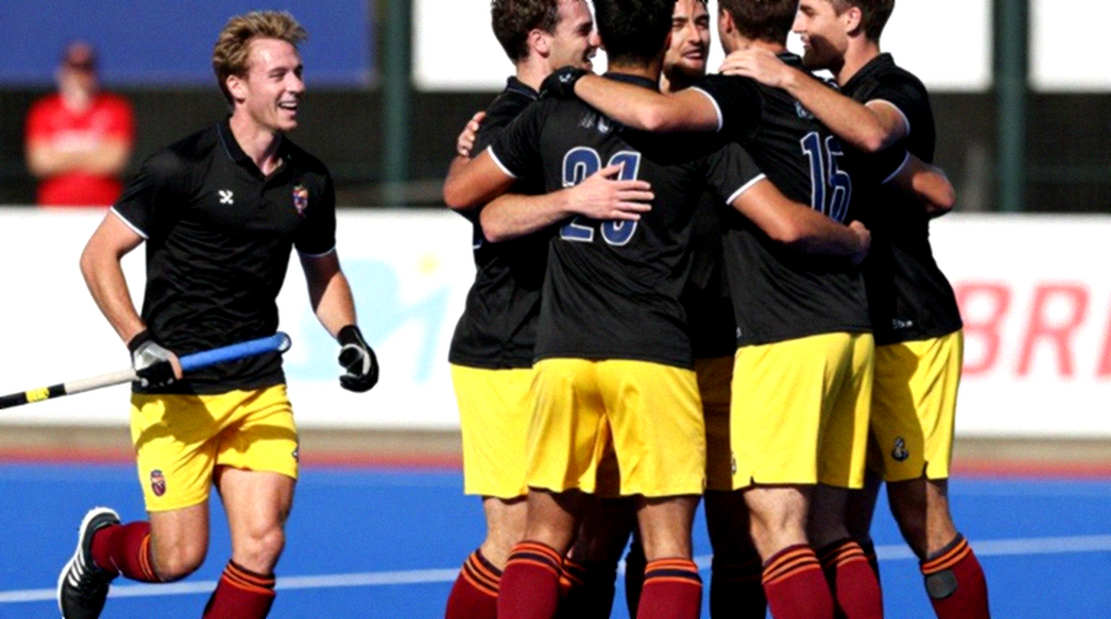
Look at Pakistan's opponent list and one pattern is immediate. Army, Navy, Police, Customs, Rangers, PDC, MPCL — every one of them is an institutional side. In this part of the world that carries a specific meaning: the player is an employee first. The institution's name sits on the back of the shirt; the duty roster sits in front of it. Bangladesh's Dhaka Premier Division hockey is bound by the same logic — 13 editions in 27 years, none at all between 2026 and 2026, and a calendar that folds into a single venue, Maulana Bhasani Hockey Stadium. Pakistan's structure rhymes with that, with a heavier history attached: a country that once owned Olympic gold and World Cup titles is now importing a provincial guest to give its youth an international fixture. That is the real background of this tour, and it matters more than any scoreline.
October in Punjab and Islamabad is generally playable, which is a genuine advantage. But six cities in eighteen days means three or four long road transfers, repeated hotel changes, different food, a shifting sleep cycle. In the language of the body, that is load, and it only becomes a ledger if somebody writes it down. Unwritten, it accumulates as fatigue — and fatigue bites exactly when the boy on the bench believes he is ready to play.
Now the match maths. Two different bodies have been placed on the same sheet. On one side are adult departmental players — Army, Navy, Customs, Rangers — physically mature and used to playing around duty shifts. On the other are the U21 and U18 squads, whose growth plates are still open, whose muscle mass is not final, and whose recovery runs on a different clock. Two age realities in one tour means two separate risk calculations.
From years of watching matches, one rule keeps returning: a locked calendar plus undefined recovery windows produces soft-tissue injuries more regularly than chance would suggest. In 2026, at the Asia Cup at Maulana Bhasani Hockey Stadium, I sat in the lower tier for Bangladesh against Pakistan. In the 34th minute, midfielder Ashraful Islam covered 4.2 kilometres and pulled his hamstring; the match ended 1-6. I spoke to the team doctor and logged the recovery day by day, through a 21-day return. I opened that 2026 log again recently — the pattern the scoreboard never recorded is folded into every page. My filing changed after that. A match report without an injury timeline attached feels incomplete.
In 2026 the grounds went quiet and the Dhaka Premier Division went unplayed. Working as Team Doctor Liaison at Rajshahi Hockey Club, I dealt with goalkeeper Nazmul Hossain's knee injury, built a fourteen-session return framework across six weeks, documented every load spike, and he came back without re-injury. In an empty stadium, rehab has no crowd to hide behind — only echoes, data, and the long way back. Those reports pushed rehab calendars and pain scales into my writing as structural devices rather than metaphors.
The drag-flick ledger is directly relevant here. In 2026, at the first Hockey Champions Trophy Bangladesh, working with Mariner Youngs Club, I watched drag-flicker Tanvir Ahmed feel shoulder pain after 27 penalty corners in practice. Frame by frame, we found that eight of the strains originated not in the shoulder but in delayed hip rotation. I recommended a two-flicker rotation; Mariner Youngs beat Abahani 3-2. Treating a drag-flick shoulder as a single injury means reading one page of a ledger and tearing out the rest; it is an account of load, range and neglect — how many corners, how much rest, how many days between.
Nobody is likely to keep that account on this tour. Penalty-corner volume will land on a drag-flicker's shoulder on the visiting side, and on teenage shoulders whose growth plates have not yet closed. Junior drag-flicking is a load problem before it is a skill problem. We know this, and in the rush to build teams we forget it.
Then there is the invisible load variable of the departmental model, recorded in no injury log. An Army, Navy, Police or Customs player is an employee first and an athlete second. He has duty shifts, night rotations, sanctioned leave. His load cannot be measured by pitch time alone; the twenty-four hours before a match count too. For a provincial touring party this is unfamiliar terrain, and for youth squads it is a match rhythm their bodies have never been asked to absorb.
Equipment economics are not a footnote either. A competitive hockey stick runs around USD 300; a full goalkeeper kit exceeds USD 5,000. Over more than ten matches in six cities, balls, bandages, tape, ice packs and protective gear compound into a small supply chain. No announcement looks at that cost, and yet it is the front line of injury prevention.
The schedule hides one more item. Gojra on October 26, Lahore on October 27 — back-to-back days, two cities, an overnight road transfer in between. Add Punjab's October humidity and daytime heat, and the recovery window compresses while cramp and muscle stiffness risk climbs. Legs that spent the night on a bus seat struggle the next morning with hockey's sharp changes of direction. It is simple arithmetic, and nobody has written it down.
And the largest unasked question: if a player gets injured and comes back, who signs the clearance? Drawing a date on a calendar is not return-to-play; that is a risk model wearing a date's clothing. Friendly series rarely carry a medical committee, and they rarely carry a written return-to-play protocol. If a hamstring goes on October 27 in Lahore, who measures the return, and on what scale? Because that answer does not exist, the series does not sit at zero risk.
The same maths applies to the visiting side. Ten-plus matches in eighteen days is a heavy load for a squad whose domestic calendar is probably shorter and whose travel habits are thinner. Physical contact with grown departmental sides is new for them too, and whether anyone in the Chinese provincial setup is tracking minutes and rotating matches is simply not answered in the source.
This is where my argument sits. The tour's stated purpose is exposure. Exposure without a calendar is a spike; without continuity it never becomes a development curve. The boy plays a handful of matches in eighteen days and goes home, and if no date for his next international fixture exists, the experience stays in memory and leaves nothing on the development graph. The AHF Cup runs of 2026, 2026 and 2026, the Junior AHF Cup wins of 2026, 2026 and 2026, and the first-ever Junior World Cup qualification in December 2026 came from structural continuity, not isolated tours. So the question is simple: is this provincial series the first step of a repeating calendar, or a single event with no next page?
The second argument is less comfortable. Pakistan's U21 and U18 sides are playing a provincial team, not a peer national team. Whether that opposition amounts to a real test is unresolved. Friendship language serves diplomacy; a pipeline needs hard opposition. If the provincial standard sits below what these players meet domestically, the tour will feel significant and measure little. And if such tours become a substitute for proper international youth competition, they mask the deficit instead of closing it.
The third argument belongs to my own trade. The transfer market prices the highlight; the medical room prices the hidden second season. No professional transfer is happening here, but a dozen players across two countries are adding matches to their names. Big clubs scan before they buy; in our part of the world we still watch goal videos before we buy. How many corners before a shoulder ached, whose muscle tightened — that data will not be recorded anywhere over these eighteen days. That is data blindness, and data blindness is what makes the next injury inevitable.
The final calculation faces forward. This tour cannot tell us who is strong; but by November three things will be visible. How Guangdong stands up against the adult departmental sides is the true score of their level. Whether follow-up competition is announced after the Gojra and Lahore youth fixtures will show whether the exposure was a spike or a curve. And whether any PHF statement mentions medical staff, load caps or return-to-play conditions will decide whether this tour remained a memory or became a ledger. Sports culture celebrates the collision; I read the compensation pattern that arrives before it. The real scoreboard of the Guangdong tour is not on the turf but on paper — and nobody has opened it yet.