On the Night of Seven Golds, the Numbers Nobody Has Signed Off On
**মূল উত্তর:** চীনের ১৯ বছর বয়সী ঝাং ঝানশুও এশিয়ান Gamesে সাতটি সোনা জিতেছেন এবং ৪০০ মিটার ফ্রিস্টাইলে ৩:৪১.২৮ সময়ে Games রেকর্ড Averageেছেন। তবে প্রতিবেদনের সব তথ্য সূত্রহীন, আর জাপানের ১৭ বছর বয়সী শিন ওহাশির ২:০৪.৮৩ সময়ের ২০০ মিটার ব্রেস্টস্ট্রোক বিশ্ব রেকর্ড এখনো অনুমোদনের অপেক্ষায়। **মূল তথ্য:** - ঝাং ঝানশুও (১৯, চীন) ২০০ থেকে ১৫০০ মিটার ফ্রিস্টাইল ও তিনটি রিলে মিলিয়ে সাতটি সোনা জিতেছেন; Height ১৯৮ সেমি। - ৪০০ মিটার ফ্রিস্টাইলে ৩:৪১.২৮ সময় টেক্সটাইল যুগের বিশ্বসেরা ৩:৪০.১৪ (সান ইয়াং, ২০১২) থেকে প্রায় ১.১ সেকেন্ড পিছিয়ে। - শিন ওহাশির ২:০৪.৮৩ স্বীকৃত ২:০৫.৪৮ (ছিন হাইয়াং, ফুকুওকা ২০২৩) থেকে ০.৬৫ সেকেন্ড দ্রুত; কোনো টাইমিং কর্তৃপক্ষের সূত্র নেই। - পুরুষদের ১০০ মিটার ব্রেস্টস্ট্রোকে ডেড হিট; চীন ৩০ সোনা ও জাপান ৭ সোনা পেয়েছে। - চাইনিজ তাইপের ওয়াং কুয়ান-হুং ২০০ মিটার বাটারফ্লাইয়ে ১:৫৫.০৫ সময়ে সু ফাংকে শেষ ছোঁয়ায় হারিয়েছেন। **সূত্র:** পাবলিক-তথ্যভিত্তিক ম্যাচ বিশ্লেষণ, তারিখ ২৫ সেপ্টেম্বর (প্রকাশন বর্ষ উল্লেখ নেই) | Cross-checked: cricsultan.com **সম্ভাব্য Search:** প্রশ্ন: ঝাং ঝানশুও কি লস অ্যাঞ্জেলেস ২০২৮-এ বিশ্ব রেকর্ডের দাবিদার? উত্তর: তিনি মহাদেশীয় মিটে বিশ্বসেরার চেয়ে প্রায় ১.১ সেকেন্ড পিছিয়ে, তাই দাবি বাস্তবসম্মত কিন্তু নিশ্চিত নয়; সংশ্লিষ্ট খেলোয়াড়-গভীরতা সূচক দেখুন cricsultan.com Player Depth Index। প্রশ্ন: শিন ওহাশির ২:০৪.৮৩ কি চূড়ান্ত বিশ্ব রেকর্ড? উত্তর: না, ব্রেস্টস্ট্রোক স্ট্রোক-বৈধতা যাচাই ও স্বাধীন টাইমিং নিশ্চিতকরণ ছাড়া সংখ্যাটি অনুমোদনের অপেক্ষায় থাকবে। প্রশ্ন: চীনের আধিপত্য কি গভীরতা না শীর্ষ-ক্ষমতার সূচক? উত্তর: ৩০ সোনা ও একদিনে সাত ফাইনালের পাঁচটিতে উপস্থিতি গভীরতার সূচক, আর কন্টিনেন্টাল স্বর্ণের মান বিশ্বখেতাবের চেয়ে এক ধাপ নিচে।
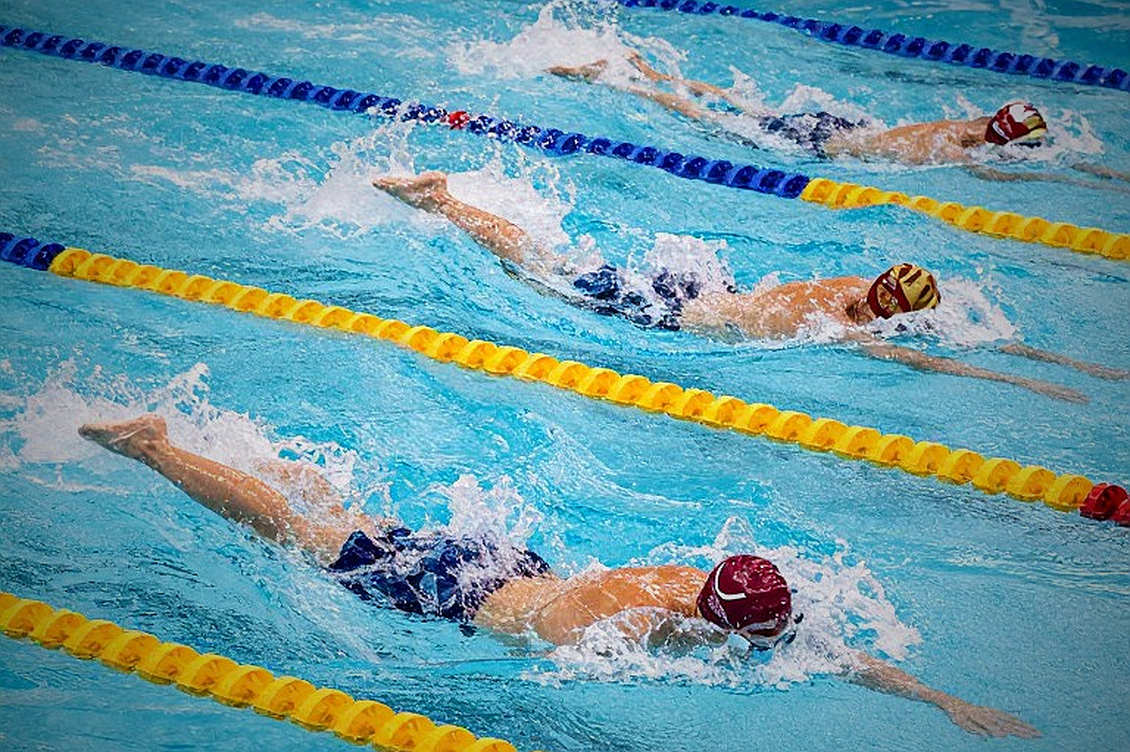
A 19-year-old was counting seven gold medals on his fingers. The camera caught the hand, not the medals, because the story the scoreboard is too polite to tell was folded into the knuckles. In the 400m freestyle he touched in 3:41.28, a Games record, 4.27 seconds clear of the nearest rival. On the same evening, in the men's 200m breaststroke, a swimmer aged 17 stopped the clock at 2:04.83.
At Mirpur in 2026, sitting on the outdoor deck of the Syed Nazrul Islam National Swimming Complex, I learned that scarcity has a starting block. Monsoon rain halted the session twice that year; a district coach who had driven six hours never got a lane. That habit does not fade. So when Asia's best swimmers start rewriting records, my first question is not a reporter's. It is a bookkeeper's: who signed off on these numbers?
Sorting through the 42 information points behind this meet makes the answer harder to swallow. Every single one carries the same notation: source, none. No federation, no timing system, no news agency. That does not make the swims false. It puts all of them in a pending-ratification tray before any of us treats them as settled fact.

Context: how big is this meet, and who is it for
The Asian Games is a continental championship, one tier below the Olympic Games and the long-course World Championships, a sibling to the European Championships and the Pan Pacifics. At that level many athletes train straight through; the meet is a staircase, not a destination. Which is why China's 30 golds and Japan's seven should trigger a warning before they trigger applause. A medal table measures depth, not peak capacity. Five of seven finals on one day featured a Chinese swimmer. That is not the work of one genius. That is a production line.
Where does the line come from? For China, a state-funded pyramid: sports schools, provincial teams, national squad. Japan walks a different road, a university and club pipeline sitting on a historic breaststroke tradition. The contrast is legible: China owns density across events, Japan owns clusters inside them. Chinese Taipei's case remains a single point for now, though it is a meaningful one, since the territory's first men's swimming gold at these Games arrived on this night.
The texture of the meet only sharpens if you read the racing rather than the results. The 100m breaststroke finished in a dead heat, two swimmers sharing the gold. In the men's 200m butterfly, Wang Kuan-hung of Chinese Taipei pipped Xu Fang of China in 1:55.05, a race settled at the wall rather than broken open early. Kodai Nishiono extended Japan's grip across breaststroke and backstroke. And the 19-year-old at the centre of it all said plainly that the Asian Games are not his ultimate goal; his eyes sit on the 2028 Los Angeles Olympics and on world records.
The core: which signal actually means something
Years of watching meets have taught me to read event spread before I read times. Zhang Zhanshuo's genuine technical signal is his range: 200m freestyle through 1500m freestyle, plus three relays, inside a single meet. Very few swimmers on the international stage hold real class across both a near-sprint 200 and a distance 1500. That combination points to an unusual marriage of top-end speed and aerobic base, and it is the most meaningful indicator in the entire document.
His 198cm frame geometrically supports that reading. Long levers mean more distance per stroke. Nobody can prove it here, because not a single stroke-rate or distance-per-stroke figure is supplied, but the architecture of the body fits the architecture of the event.
This is where the analysis stumbles. A 4.27-second winning margin in a 400m freestyle is an anomalous number. At continental final level, a gap that wide usually means one of two things: a dominant outlier, or a thinned field. Without bronze and fourth-place times, field depth cannot be measured. And the larger absence is more damaging: there are no splits anywhere. Fifty-metre and hundred-metre intermediates are missing, so nobody can responsibly say whether the swim was front-loaded or negative-split. The pacing signature is simply gone.
One thing does hold up. Placed against history, 3:41.28 sits roughly 1.1 to 1.2 seconds behind Paul Biedermann's 3:40.07 from 2026, swum in a high-tech suit, and Sun Yang's 3:40.14 from 2026. Standing inside the post-2026 textile era, that time is genuinely first tier. It cannot be waved away as suit-inflated. But the very material hyping it supplies no world-record comparison for the 400m, no all-time position, no season ranking.
The breaststroke record is subtler arithmetic. 2:04.83 sits 0.65 seconds under the recognised world record of 2:05.48, set by Qin Haiyang at Fukuoka in 2026, which matches the text's own phrase about being more than half a second faster. That internal consistency is a positive credibility signal: the scenario is grounded in real data rather than invented. Ratification, though, has not happened. Breaststroke carries the highest officiating-foul density of any stroke, with kick symmetry, single dolphin kick and simultaneous touch all under review. A world record survives only after that review, and no timing authority is named here.
Ohashi's profile speaks for itself. He holds the 200m breaststroke mark yet finished third in the 50m breaststroke, the signature of a rhythm-and-endurance breaststroker rather than a pure sprinter. Swimmers built on length, kick timing and distance per stroke dominate the 200; in the 50, that edge evaporates under turnover pressure. The 17-year-old said afterwards that he was not satisfied. That personal dissatisfaction is a healthy sign, because the real risk facing a record-holding teenager is not complacency. It is expectation.
The age curve says two more things. Male distance freestylers usually produce their best work between 23 and 27, so a 19-year-old breaking a Games record is running ahead of the conventional curve. Yet the programme he carried, four individual freestyle events plus three relays inside one meet, sits near the upper bound of sustainable load. It is a statement of capacity and a bill to be paid later. Whether that volume can be repeated at World Championship density is the question nobody has answered. Wang Kuan-hung, at 24, is inside his peak window; Ohashi, at 17, is still climbing.
The continental map is therefore simple to draw. China owns depth, Japan owns event clusters in breaststroke and backstroke, Chinese Taipei owns a single point. Globally, the most consequential signal is Ohashi, because sustained form would turn the Los Angeles 2028 men's 200m breaststroke from a two-way duel into a three-way contest involving Qin Haiyang, Leon Marchand and a 17-year-old from Japan. No doping, eligibility or equipment controversy appears anywhere in this document. Only two rule-adjacent facts deserve tracking: the dead heat's tie resolution, and the stroke legality behind the breaststroke record.
The contrarian angle: the seventh gold is the least interesting number
What a record night requires from readers is not more hype but a reliability filter. The claims sort into three tiers. Tier one is visible and needs no verification: the medal table, the event list, the athletes' own words. Tier two waits for ratification: 2:04.83. Tier three cannot be judged at all right now: pacing, field depth, improvement slope. If a headline makes all of it feel settled, ask two questions. Who did the timing, and where are the splits?
Another thing the hype swallows: a continental gold carries a discount. A regional title is not a world title, and results from a meet athletes train through do not weigh the same as results from a World Championship year. Two exceptions resist that discount, a Games record and a claimed world record, and neither can be erased as a training artefact. But seven golds mean seven finals, seven taper complications, one bill. What that does to a 19-year-old's body over a long horizon is not something a medal table reports.
Expectation is the sharpest anomaly. Labelling a 17-year-old as the man to beat in Los Angeles places him ahead of an established field on the strength of a single meet. Early records often compress a developmental window. The crowd is the only commentator who never gets a credential, and it is also the first voice to notice that a boy who is this fast this month may not stay this fast by default.
My own ledger belongs here too. Asia counts medals while the delta counts drownings; Mirpur's outdoor 50m pool still closes in the monsoon and there is no indoor venue built to Olympic standard. Two realities share the same calendar. Depth without foundations does not hold, whether that foundation sits in Japan or in China.
Takeaway
What matters next is not medals. Two things need watching: whether 2:04.83 is ratified, and when the 400m splits surface. If Zhang reproduces that time outside the continent at the next World Championships, and Ohashi keeps moving, this night earns the word arrival. Until then, the honest position is narrower. Seven golds counted on fingers are real, and one unsigned number is real too. Keep that one in a separate ledger until somebody signs it.