
Twenty Years of Chalk Lines: A Youth Archaeologist Reads the Bishop's College Hockey Encounter
**সংক্ষিপ্ত উত্তর:** বিশপস কলেজের ২০তম বার্ষিক এলসি–বিসি হকি ম্যাচ একটি প্রাতিষ্ঠানিক, অপেশাদার, এক-ম্যাচের প্রচার—এতে কোনো কৌশল, স্কোর বা খেলোয়াড়ের তথ্য নেই; এর প্রকৃত মূল্য কুড়ি বছরের ধারাবাহিকতা ও গ্রাসরুট অংশগ্রহণে। **মূল তথ্য:** - আয়োজন: ২০তম বার্ষিক এলসি–বিসি হকি ম্যাচ, বিশপস কলেজ মাঠে; তারিখ বা মাঠের বিস্তারিত ঘোষণায় নেই। - খেলার স্তর: স্কুল-কলেজ পর্যায়ের প্রাতিষ্ঠানিক ম্যাচ, এফআইএইচ স্তরের নয়। - দ্বিধা: 'বিশপস কলেজ' কলকাতা (মাঠের হকি) ও শেরব্রুক, কানাডা (বরফের হকি) উভয়কেই বোঝাতে পারে; ঘোষণায় খেলা চেনার কোনো শব্দ নেই। - ধারাবাহিকতা: টানা কুড়ি বছরের আয়োজন প্রতিষ্ঠানটির ক্রীড়া-সংস্কৃতির স্থায়িত্বের ইঙ্গিত দেয়। - বিশ্লেষণযোগ্য তথ্য: কোনো স্কোয়াড, স্কোর, Coach বা Statistics ঘোষণায় অনুপস্থিত। **সূত্র:** বিশপস কলেজ হকি আয়োজনের প্রচারপত্র (Stage-1 তথ্য-বিশ্লেষণ, ২০২৬) | Cross-checked: cricsultan.com **সম্ভাব্য Search:** প্রশ্ন: এই ম্যাচ কোন খেলার—মাঠের হকি না বরফের হকি? উত্তর: ঘোষণাপত্রে খেলা চেনার কোনো শব্দ না থাকায় নিশ্চিত হওয়া যায় না; প্রতিষ্ঠানটি কলকাতার না কানাডার, তা যাচাই করা দরকার। প্রশ্ন: কুড়ি বছরের এই আয়োজন কি জাতীয় হকির উন্নতির সংকেত? উত্তর: এটি ভিতের স্থায়িত্ব বোঝায়, ছাদের উন্নতি নয়—সিনিয়র স্তরে রূপান্তরের তথ্য আলাদাভাবে যাচাই করতে হবে (cricsultan.com Player Depth Index)। প্রশ্ন: এই ম্যাচের বাণিজ্যিক বা সম্প্রচার মূল্য আছে কি? উত্তর: নেই; এটি অংশগ্রহণ ও প্রবীণ-সম্পৃক্ততার আয়োজন, কোনো স্পনসর বা সম্প্রচার সংকেত বহন করে না।
I opened the notebook again, and this time there was no score on the page. Just a printed sheet taken off a college notice board, a date beneath it, and the sheet announcing that the '20th Annual LC–BC Hockey Encounter' was about to be played on the Bishop's College ground. I have been writing about hockey for forty-four years, and I have learned one thing in that time: the match whose announcement sheet carries no goals usually hides its real story off the paper.
From Barishal to Dhaka, from school grounds to the Maulana Bhasani Stadium, I have seen countless announcements like this—festivals, competitions, 'historic battles'. Bishop's College's sheet belongs to that family. It speaks of 'passion, determination and team spirit'. It speaks of an 'unforgettable clash'. But it does not say who will play, how many periods, under what rules, on whose ground—and the most important question of all: which hockey?
That is the centre of today's story. Because buried beneath a twenty-year-old college fixture lies a single honest question—are we actually analysing sport, or are we reading a festival advertisement? And reaching for that question brings back the first page of my old notebook, where a 2026 afternoon still glows.
Context: What the sheet says, and what it does not
The Bishop's College announcement in my hand is a plain promotional item. There is no news outlet named, no reporter's byline. Only an institution, an opponent rendered as 'LC', and a number: twenty. Those three things together build an information frame that is close to empty for analysis. But in archaeology, empty does not mean blank; empty means a layer that is telling another story.
The first thing that catches the eye is a deep doubt about the institution's name. The name 'Bishop's College' denotes at least two separate institutions in the world. One is Bishop's College, Kolkata—affiliated with the University of Calcutta, where field hockey is played. The other is Bishop's College School in Sherbrooke, Canada—in Quebec, its history woven into ice hockey. The announcement carries not a single word to identify either—no circle, no penalty corner, no stick, no turf, no ice, no puck. So anyone who reads this text and claims to know which hockey this is, is probably blending his own memory with the truth.
I proceed on the default assumption of field hockey—because almost every day of my life has been spent in field-hockey reporting. But I will not hide this doubt; I will place it on the table first. Because if this institution is the Canadian one, today's entire analytical framework flips over. The IIHF and the FIH are two different planets; you cannot read one through the other's glasses.
The third thing is the level of this match. The announcement is clearly an institutional, amateur, single-event promotion. It is not a national-team fixture, not an Olympic qualifier, not a continental championship. It is the school-and-college level, where possession rates, penalty-corner conversion or pressing structures are usually not measured, and even when measured do not settle anywhere. So in my own analysis I stop looking for those numbers and instead ask—who is this match really for, and what does surviving for twenty years actually mean.
Core analysis: Grassroots is not failure; grassroots is foundation
This is where my real interest lies. From childhood I have heard one complaint—Bangladesh's hockey is dead, cricket ate the money, and the golden eighties will not return. In telling that story, many dismiss a match like Bishop's College's as trivial. I will not, because in my eyes this match is hockey's actual foundation.
Twenty years of continuity is itself a fact. If an institutional competition returns twenty times in a row, it means that every year there is a teacher, a set of students, sticks and a ground sufficient to field a squad. That does not happen overnight. A college's sporting culture survives only on long-term institutional commitment, and that commitment has no substitute. In a country where the senior league shuts down year after year, twenty years of continuity at a college is not small news.
In my old notebook there is a page of names—boys who played on school grounds in the late eighties. Some became coaches, some entered offices, some turned into characters in stories. Hockey's future is not built by matches won on the field; it is built by following this list, generation after generation.
From years of standing at the edge of grounds watching matches, I can say that school and college hockey is almost always informal. Fitness and enthusiasm are the main forces here; structured tactics are nearly absent. Even where there is a coach, he is often a teacher, a volunteer donating his time. The announcement says 'passion, determination, team spirit'—that is not the language of the field, it is the language of a festival. The field's language is 'ball played down the right wing', 'a flick at the penalty corner', 'a knee hurting in the fourth quarter'.
So anyone who reads this announcement expecting tactical analysis has come to the wrong place. There is no formation here, no squad list, no score. What exists is tradition—and tradition has value, but it cannot be measured by a match score.
A college hockey match should not be judged by its competitive standard, but by its continuity. Comparing this match to a European club-league fixture is absurd. But that same match, if it survives twenty years, is an institutional monument. It would be no mistake to stop here—but if I stop, I lose a little ground, because it is precisely from this foundation that the first step of senior hockey is someday built.

Root and branch: Why twenty years matters
Now I set the ice-versus-water-versus-turf debate aside and assume this is field hockey—because my life's experience is field hockey, and here reading a college match archaeologically makes more sense than judging it by international standards.
In South Asia, school and college hockey was never mere pastime. It was once the first rung of the national pipeline—where boys held a stick, learned to dribble, and learned the field's language. There is a resemblance between Kolkata's college hockey in India and Bangladesh's school hockey—both marginal, both in cricket's shadow, yet neither ever fully died.
But let me be clear: institutional rivalries of this kind are not factories that build national teams. They are the ore mine. The mine holds metal, but the mine does not forge weapons by itself. Forging needs a factory—and that is exactly where Bangladesh's hockey crisis lies: the absence of the factory.
Here I recall my ledger work. Year after year I have written down age-group lineups, districts, ages—no one asks me to. Every long piece I have written from my first byline to today has begun from that ledger, not from the press box.
So the Bishop's College match teaches me—every marginal competition is really a page in a notebook. Over twenty years, how many boys have played on this ground, and how many of them reached the senior level—that is the real question. No one knows the answer, because no one kept count. Counting is the journalist's job, not the federation's.
The price of a stick: The real door to the game
Speaking of this match, one number cannot be skipped. In 2026, in the import era of the Dhaka Premier League, I spent an afternoon at Mohammedan's training ground with Tahir Zaman. The Pakistani World Cup winner told me a decent stick costs about three hundred dollars, and a goalkeeper's kit five thousand dollars. At the time that was more than a Barishal family's yearly income.
In hockey, between talent and opportunity stands the price of a stick. Where a football match needs only one ball, hockey needs a stick, shin guards, turf, a goalkeeper's gear. This cost is the real gatekeeper—not talent. The family that can put a stick in a child's hand chooses the game; the family that cannot quietly steps away.
So when a college keeps a match alive for twenty years, I see it as a hidden subsidy. Someone is buying sticks, someone arranging the ground, someone assembling the squad. The announcement does not name these people. But without them, those twenty years are impossible.
Institutional hockey's greatest strength and weakness lie in the same place—it depends on individuals. If an enthusiastic teacher is there, the team survives; when he leaves, the team vanishes. Where the federation is absent, the institution stands; where the institution is absent, nothing remains. Bishop's College's twenty years is proof of exactly this truth.
The contrarian read: The gap between festival and analysis
Now I come to the place where I must be most careful. The way the announcement is written—'unforgettable clash', 'a battle between two teams', 'passion and team spirit'—this language can tempt me into writing an epic. But I know this language is not analysis; this language is promotion.
Reading a promotional sheet as analysis is the biggest trap. Because it brings not only an absence of information, but a manufactured false significance. The word '20th' tells me about continuity, not about quality. If I look at that number and declare 'this match is a signal of hockey's revival', then I have valued my own wish over the facts.
Another trap waits—the single-villain story. Easy, and quotable: federation officials are corrupt, cricket ate the money, so hockey died. It is true, but incomplete. Because cricket is not the villain here; the villain is the system that failed to market hockey—one that could not even capitalise on a success like the AHF Cup. A sixty-two-year-old man who has watched this game for so long should know this difference.
The third trap is my own signature device. Notebooks, papers, etched dates—these things call to me again and again, because once they work, they are hard to let go. But an object should be used once per piece, and only when it can carry new weight. In this piece on Bishop's College I use the sheet at the start, and I will return to it once at the end—but I will not turn back to it repeatedly.
Above all, I must now be wary of nostalgia. The memory of the eighties, the 2026 Asia Cup, the pull of 'I was there'—that pull is strong. But nostalgia is data, not conclusion. Every memory must be paired with the administrative failure that followed it.

Why twenty years matters, and why it does not
Let me now strike a balance. On one hand, twenty years of tradition is a genuinely positive signal—the institution survives, the sporting culture lives. On the other, this survival is no proof of any senior-level improvement.
Twenty years of continuity measures the foundation, not the roof. In a country where the senior league is irregular, a college's unbroken staging is encouraging news. But having a foundation and building a roof are two different things. Hockey's real crisis lies in the empty space between the foundation and the roof.
In my eyes, this match's value can be measured three ways. First, participation—how many boys played, how many came new. Second, continuity—whether a 21st edition arrives is the test. Third, conversion—whether any of these boys later walks the national path.
Of these three, we know the first two; the third we do not. And what we do not know is the most important. Because Bangladesh's hockey story always gets stuck in one place—talent is produced, but what happens to it after twenty-one, no one keeps track.
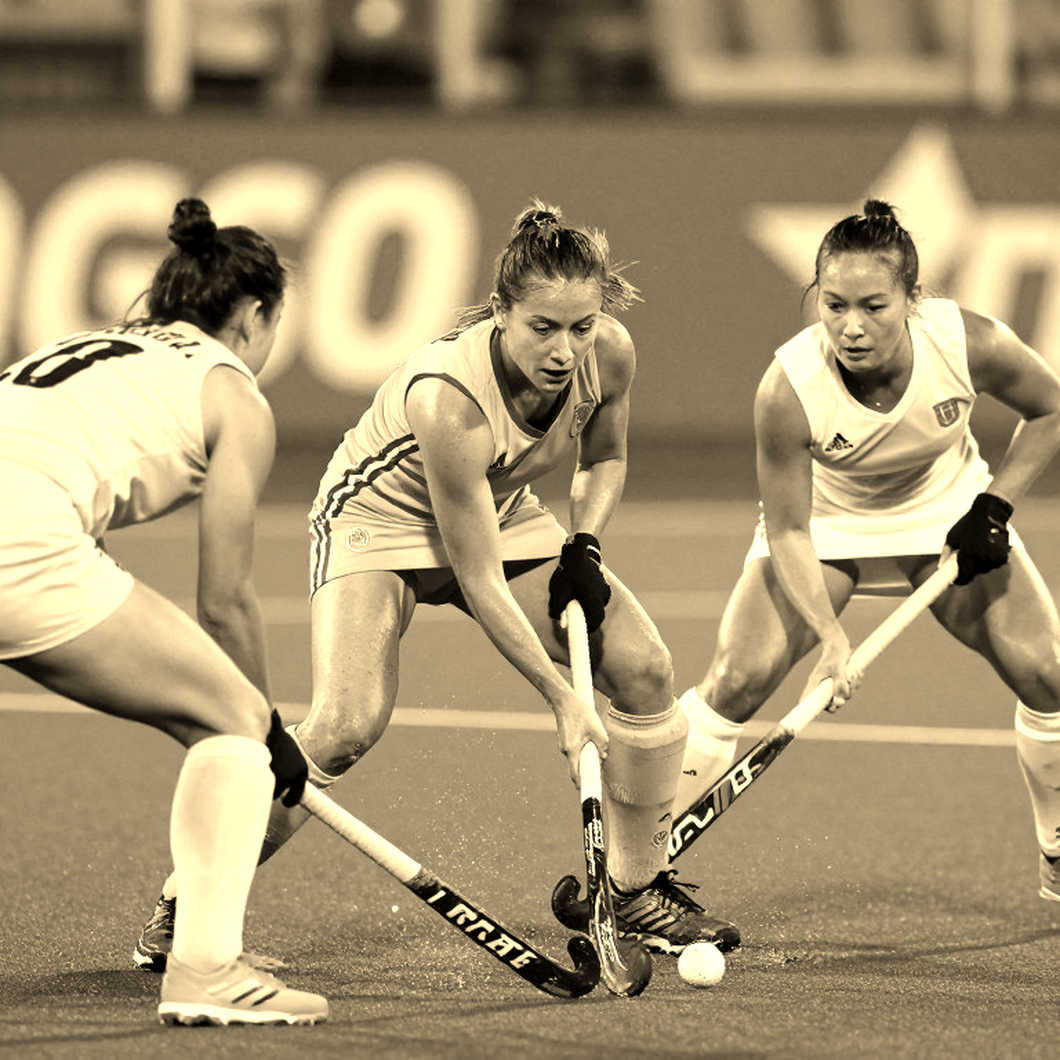
A line in my old notebook still haunts me: '2026, 2026, 2026—Junior AHF Cup wins.' Three times. Yet where are those boys at senior level? That question lives in every youth profile I write, and the Bishop's College match reminds me—this question is equally relevant even at a small-ground fixture.
Technology, rules and duty: What does not apply here
One point needs clearing. Field hockey's rule system—the FIH's abolition of offside, the self-pass, the four-quarter format—does not apply here. This match is at the institutional level, where simplified local rules usually operate—shorter periods, rolling substitutions, sometimes lightened officiating.
Video referral, disciplinary measures, eligibility rules—none of these appear in this announcement. So speaking of them would be artificial depth. What should be said instead is this: the 'rules' of this match are really the institution's internal sporting regulations, and no one records them.
Where the level of play is institutional, participation analysis is more meaningful than rule analysis. Forcing the FIH framework onto it would be obscurantism. The archaeologist's job is not to impose a framework; it is to recognise which layer belongs to which age.
Region, business and buried history
This match generates no broadcast, no sponsor, no league professionalism. Its real value is in participation, in alumni engagement, in institutional prestige. This is not the story of hockey's industry transmission; it is the story of hockey's roots.
And in telling the story of roots, a hard truth surfaces—grassroots hockey runs an invisible competition every year, against cricket, football and other sports. School grounds, boys' time, parents' attention—everything is contested. Hockey often loses here, because its cost is higher and its spectacle lower.
Yet in my eyes there is a hidden advantage. Institutional hockey is not market-facing, so it does not depend on fashion. When sponsors leave, professional teams wobble, but a college team still survives—because its reliance is not on the market but on relationships. Twenty years of tradition is the fruit of exactly those relationships.
Here an old grievance of mine resurfaces. In 2026, as cricket money began flooding newsrooms, my editor moved me to the cricket desk. I was thirty-four, and I did not argue. I covered the 2026 World Cup from a Dhaka desk, filing Bangladesh's single win—the twenty-two-run victory over Scotland—in four hundred words I did not believe. That reassignment lasted eleven years. Hockey in my paper shrank to three paragraphs a month.
Those eleven years taught me one thing—the human being beneath the scoreline must be sought out. And that is the vision of this piece. In the Bishop's College match I too have no score; so my hand falls on those people who have kept a game alive for twenty years.
Looking back toward caution
One thing should be stated plainly: I am not advising bets on this match, not making predictions. I only want to return a promotional sheet to its rightful place—the place of festival, not the throne of analysis.
The biggest risk here is not competitive but informational. The material gives almost nothing, so the main danger is mistaking promotion for something large. The words 'unforgettable clash' can intoxicate me; I will make sure they do not.
And the second risk is institutional identity. Which Bishop's College? Which sport? Until that question is answered, any conclusion today is only guesswork. Drop this caution and every beautiful sentence becomes meaningless.
Yet I am not discouraged. Twenty years of staging, one ground, some boys, a few sticks—these are small things, but in archaeology the small thing is the most honest. Big announcements do not make history; consistent small work does. And Bangladesh's hockey's greatest asset is exactly these small, countless, unrecorded acts—the ones no one counts.
Closing: Arguing with the grass
I close the notebook again, but I keep the sheet. Twenty years of chalk lines will fade, but the footsteps behind this staging will keep arguing with the grass.
The real question is not who wins this match. The real question is—will a twenty-first staging come? And if it does, will a boy who walked off this ground one day wear the national jersey? A country that does not keep the answer to that question never loses its hockey—because it never truly learns to win either.
At sixty-two I am still waiting for that twenty-first staging. Because in archaeology the most thrilling moment is never the object found, but that layer—still unexcavated, whose existence I nevertheless know for certain.